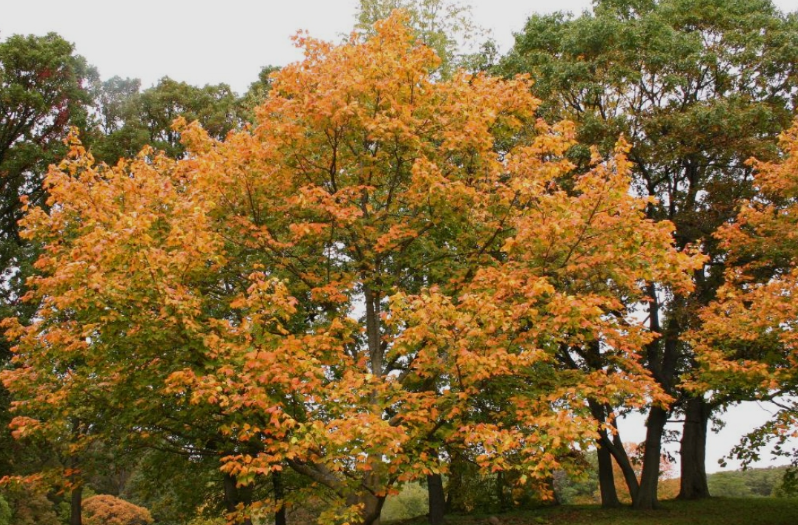
The black maple is a large, handsome shade tree that often lives in the shadow of its famous cousin, the sugar maple. The two trees look so much alike that many people walk past black maples without ever realizing it. Yet the black maple has its own strengths, including better tolerance for summer heat and dry spells, and it produces syrup that is just as sweet.
This native hardwood grows across the Midwest and the Ohio and Mississippi River valleys, with a range that reaches into southern Ontario. It typically grows 60 to 80 feet tall, and the largest trees can top 100 feet. With a dense, rounded crown and rich fall color, it makes an excellent shade tree for large yards and parks.
Black maple gets its name from its bark, which becomes very dark and deeply furrowed on older trees. Its leaves are also a deeper green than most maples, giving the tree a darker look from a distance.
Botanical Classification
The black maple belongs to the maple group, a large set of trees and shrubs with roughly 125 to 150 species around the world. Maples are now placed in the soapberry family, along with relatives such as horse chestnut and lychee.
Botanists have long debated whether black maple is a separate species or simply a variety of sugar maple. The two trees cross freely where their ranges overlap, producing trees with a mix of features. Many foresters and tree guides still treat black maple as its own species, and it is commonly grouped with sugar maple as one of the hard maples.
Brief History
Black maple has been tapped for sap alongside sugar maple for centuries. Native peoples of the Midwest and Great Lakes region collected sap from both trees in late winter and boiled it into maple sugar, an important food and trade item.
As European settlers moved into the Ohio Valley and Midwest, they continued the tradition. In many areas where sugar maple grows less well, black maple became the main source of local syrup. Its strong, heavy wood was also used for flooring, furniture and tools, and it is still sold as hard maple lumber today.
Identifying Characteristics
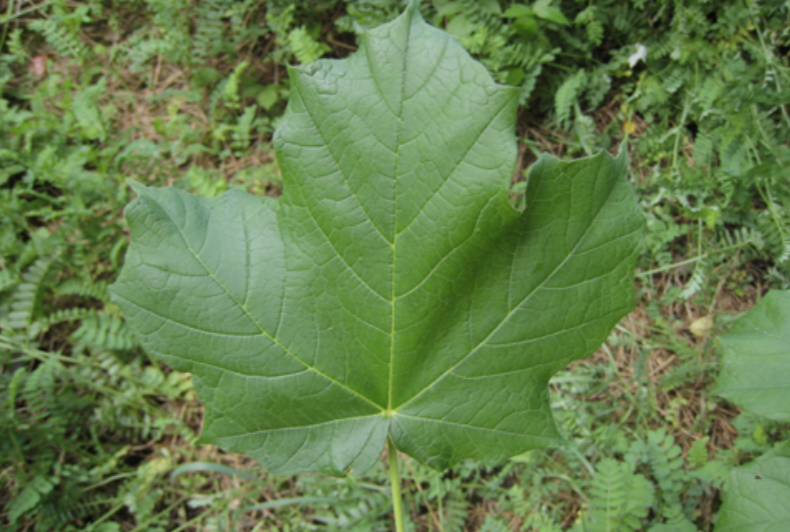
The most reliable way to spot a black maple is by its leaves. They are 4 to 6 inches across and usually have three main lobes, though some show two smaller lobes near the base. The leaf edges tend to droop, so the leaves often look slightly wilted even when the tree is healthy. The leaves are dark green on top and fuzzy underneath.
Another clue sits at the base of the leaf stalk. Black maple often has small, leafy flaps called stipules where the stalk joins the twig, and the stalk itself is usually fuzzy. Sugar maple leaf stalks are smooth and lack these flaps.
The bark starts out smooth and gray on young trees. As the tree ages, it turns dark gray to nearly black and breaks into deep, rough ridges. The twigs are orange-brown and dotted with small pores, and the winter buds are dark brown and slightly hairy.
Like all maples, black maple has opposite branching, with leaves and buds growing in pairs. Its seeds form in U-shaped pairs of winged samaras that ripen in early fall, very similar to those of sugar maple.
Fall Color
Black maple puts on a warm fall display in shades of yellow, gold and orange. Its color is usually less red than that of sugar maple, but a large tree in full color can still be striking. The show typically peaks in October across much of its range.
Like most maples, it colors best after sunny fall days and cool nights. Drought or a very warm autumn can mute the colors in some years.
Maple Syrup
Black maple sap is nearly as sweet as sugar maple sap, and syrup makers often tap the two trees together. Fresh sap is clear, watery and only about 2% sugar, so it takes roughly 40 gallons of sap to make 1 gallon of syrup. Most of that water is boiled away to leave the sweet, golden syrup behind.
Sap flows in late winter and early spring, when nights fall below freezing and days warm to around 40°F. A tree should be at least 10 to 12 inches across before it is tapped. With proper care, tapping does not harm a healthy tree, and the same tree can be tapped year after year.
Because black maple grows well in parts of the Midwest where sugar maple struggles, it is an important syrup tree in states such as Ohio, Indiana, Illinois and Iowa.
Wood and Other Uses
Black maple wood is hard, heavy and fine-grained. It is sold together with sugar maple as hard maple and is used for flooring, cabinets, furniture, cutting boards and woodenware. Its strength also makes it useful for tool handles and sports equipment.
The tree is valuable to wildlife as well. Squirrels, chipmunks and birds eat its seeds, while deer browse its twigs and buds. Its dense canopy provides nesting sites and shelter for many songbirds.
Landscape Uses
Black maple is an excellent choice for large yards, parks, campuses and rural properties. Its broad, rounded crown casts deep shade, making it a strong cooling tree near homes. Its dark green summer foliage and warm fall color give it appeal through much of the year.
Because it grows large, it needs plenty of room. It is not a good fit for small yards, narrow city strips or spaces under power lines. Like other large maples, it casts heavy shade that can make it hard to grow grass underneath.
Growing Considerations
Black maple is hardy from about USDA zone 4 to zone 8. It grows best in the Midwest and the central United States, and it handles hot summers better than sugar maple. This makes it a good alternative where sugar maple often suffers from leaf scorch.
It prefers full sun to partial shade and deep, moist, fertile soil. It grows naturally in river valleys and on rich slopes, often over limestone, and it tolerates slightly alkaline soils better than many maples. Once established, it handles dry spells better than sugar maple, though young trees still need regular watering.
It grows at a slow to moderate rate, often about a foot a year. Planting is best done in spring or fall. As with any large tree, plant it at the same depth it grew in the nursery, keep the root flare visible and avoid piling mulch against the trunk.
Common Problems
Black maple is generally a sturdy, long-lived tree, often living 200 years or more. It suffers less from leaf scorch than sugar maple, but it can still be stressed by drought, soil compaction and road salt. Verticillium wilt, a soil fungus, can cause branches to wilt and die back.
Invasive pests such as the Asian longhorned beetle threaten all maples, including black maple. Tar spot, which causes black spots on leaves, is mostly a cosmetic issue. In forests, invasive Norway maple can crowd out young black maples and other native trees.
Popular Black Maple Cultivars
Black maple is less often sold as named cultivars than sugar maple, but a few selections are available. Greencolumn is the best known, with a narrow, upright form that fits tighter spaces than the wide-spreading species. It also offers good fall color and solid heat tolerance.
Some nurseries sell black maple simply as a native seedling-grown tree. Because black maple and sugar maple cross freely, some sugar maple cultivars also carry black maple traits, such as improved heat tolerance and darker leaves.
Frequently Asked Questions
How can you tell a black maple from a sugar maple? Black maple leaves usually have three main lobes with drooping edges and fuzzy undersides, and the leaf stalks often have small leafy flaps at the base. Sugar maple leaves have five lobes, stay flatter and have smooth stalks.
Is black maple a good syrup tree? Yes. Its sap is nearly as sweet as sugar maple sap, and the two are often tapped together.
How big does a black maple get? It typically grows 60 to 80 feet tall and 40 to 60 feet wide, with some trees reaching over 100 feet.
Does black maple handle heat better than sugar maple? Yes. It generally tolerates hot summers and dry spells better, which makes it a good choice for the Midwest and lower Plains.
Why is it called black maple? It is named for its dark, deeply furrowed bark on older trees and its darker green leaves.
