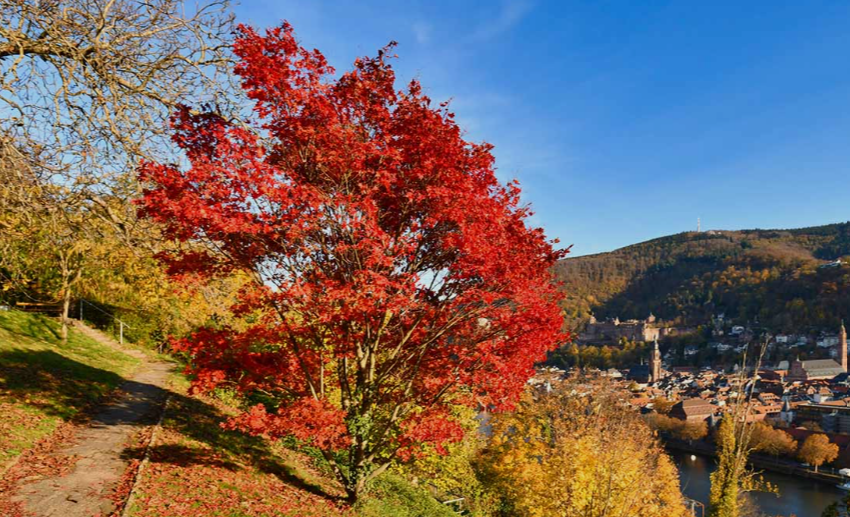
The red maple is one of the most common and most colorful trees in North America. It earns its name in every season, with red flowers in late winter, red seeds in spring, red leaf stalks in summer and brilliant scarlet leaves in fall. It is also one of the most widely planted shade trees in the United States, valued for its fast growth and dependable color.
This adaptable native tree grows across eastern North America, from Newfoundland and southeastern Canada south to Florida and west to Minnesota, Oklahoma and eastern Texas. It is often called the most abundant native tree in eastern North America. It thrives in soggy swamps, dry ridges and nearly everything in between, which is why it shows up in so many forests, yards and city streets.
Red maple goes by several other names, including swamp maple, scarlet maple and soft maple. Most trees grow 40 to 60 feet tall with an oval or rounded crown, though wild trees can grow taller.
Botanical Classification
The red maple belongs to the maple group, a large set of trees and shrubs with roughly 125 to 150 species worldwide. Maples are now placed in the soapberry family, along with relatives such as horse chestnut and lychee.
Red maple belongs to a group known as the soft maples, along with silver maple. These trees grow faster than the hard maples such as sugar maple and black maple, and their wood is lighter and softer. Red maple and silver maple often cross in the wild, and their hybrid, called Freeman maple, has produced some of today’s most popular shade trees.
Brief History
Red maple has been part of eastern North American forests for thousands of years. Native peoples used its inner bark in traditional medicine and made dyes from its bark. They also tapped it for sap, though sugar maple was usually preferred.
European settlers used red maple wood for furniture, tools and spinning wheels, and they made ink and dyes from its bark. In the last century, red maple has spread rapidly through eastern forests. Changes in land use, logging and the suppression of wildfires have favored this adaptable tree, and it is now far more common than it was when Europeans first arrived.
Identifying Characteristics
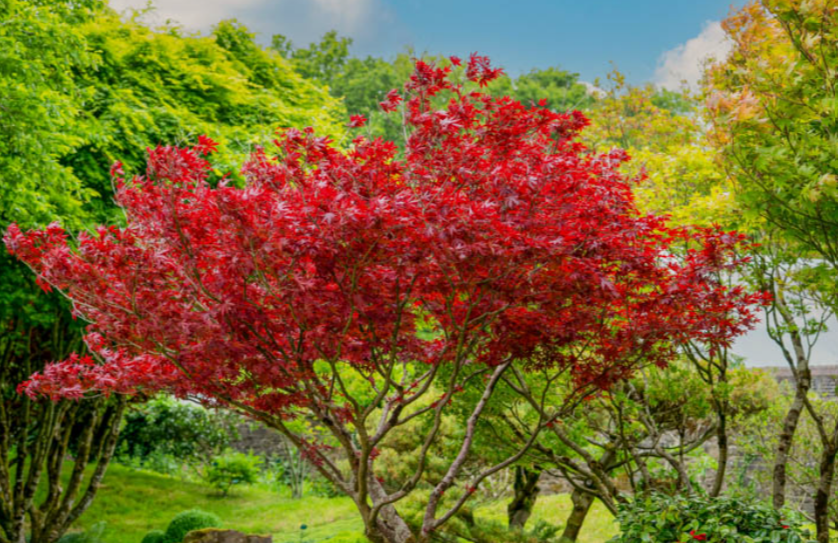
Red maple leaves are 2 to 6 inches long and usually have three main lobes, sometimes with two smaller lobes near the base. Unlike sugar maple leaves, the edges are covered in small, sharp teeth. The leaves are green on top and pale or whitish underneath, and the leaf stalks are often red.
The tree is one of the first to bloom each year. In late winter or very early spring, before the leaves appear, its branches are covered in small clusters of red flowers. These are soon followed by red, winged seeds called samaras, which ripen and fall in late spring and early summer, much earlier than the seeds of most maples.
Young red maples have smooth, light gray bark. As the tree ages, the bark becomes darker and breaks into long, scaly plates that can look shaggy. Its twigs are shiny and reddish, and its winter buds are small, rounded and red.
Like all maples, red maple has opposite branching, with leaves, buds and twigs growing in pairs. Its toothed leaves, red stalks and early red flowers make it fairly easy to tell apart from sugar maple and Norway maple.
Fall Color
Red maple is famous for its fall color, which can range from brilliant scarlet to orange and gold. Some trees turn a deep red, while others turn mostly yellow, depending on their genetics and growing conditions. The color is often most intense in the northern part of its range, where nights are cooler.
Red maple is usually one of the first trees to change color in autumn. In many areas, its leaves begin turning in mid to late September, especially in wet areas. Because the color varies so much from tree to tree, gardeners who want reliable red fall color often choose a named cultivar.
Maple Syrup
Red maple can be tapped for syrup, but its sap is usually less sweet than sugar maple sap. That means it takes more sap and more boiling time to make the same amount of syrup. Some producers tap red maples alongside sugar maples, especially in areas where sugar maples are scarce.
Red maple also leafs out earlier in spring than sugar maple. Once the buds begin to swell, the sap often develops an off-flavor, so the red maple tapping season tends to be shorter.
Wood and Other Uses
Red maple wood is sold as soft maple. It is lighter and softer than hard maple but still strong enough for furniture, cabinets, flooring, pallets and paper pulp. Some red maple wood shows a wavy pattern known as curly maple, which is prized by furniture makers and gunsmiths.
The tree is important to wildlife as well. Its early flowers are one of the first food sources for bees in spring. Squirrels and birds eat its seeds, and deer, elk and rabbits browse its twigs and buds.
Landscape Uses
Red maple is one of the most popular shade trees in the eastern United States. It grows quickly, provides dense summer shade and puts on a reliable fall show. It works well as a lawn tree, a street tree and a tree for parks and campuses.
It is also an excellent choice for wet or poorly drained spots, where many trees struggle. It can grow along streams, in rain gardens and near ponds. Smaller, narrower cultivars suit tighter spaces near homes and along streets.
Growing Considerations
Red maple is hardy from about USDA zone 3 to zone 9, giving it one of the widest ranges of any maple. It grows in full sun to partial shade and handles sandy, loamy and clay soils. It grows especially well in moist soils and tolerates periods of flooding.
It prefers acidic to neutral soil, roughly pH 5.0 to 7.0. In alkaline soils, its leaves can turn yellow because the tree cannot take up enough iron and manganese. It is also sensitive to road salt, so it is not ideal along heavily salted roads.
Red maple grows at a moderate to fast rate, often 1 to 2 feet a year. Its shallow roots spread widely and can make it hard to grow grass or flowers underneath. Over time, roots near the surface can lift sidewalks, so it is best planted with plenty of room.
Plant red maple in spring or fall, at the same depth it grew in the nursery. Keep the root flare visible and spread mulch in a wide ring without piling it against the trunk. Water young trees regularly during dry spells, especially in their first few years.
Common Problems
Red maple is a tough tree but has a few weaknesses. Its branches can be brittle, so storms sometimes break limbs. Leaf scorch can appear during hot, dry weather, especially on trees planted in pavement or poor soil.
Verticillium wilt, a soil fungus, can cause branches to wilt and die back. Trees in alkaline soils may develop yellow leaves from nutrient deficiencies. Girdling roots, which wrap around the base of the trunk, are common in nursery-grown trees and can slowly weaken them.
Red maple leaves are also highly toxic to horses. Wilted or dried leaves, such as those on broken branches after a storm, can cause serious illness. It should not be planted in or near horse pastures.
Popular Red Maple Cultivars
Red Sunset is one of the most popular red maple cultivars in North America. It colors early, turning brilliant orange-red in September, and is very cold-hardy. October Glory is another favorite, holding its green leaves late and turning deep crimson in late October or November, making it especially useful in the South.
Autumn Flame offers early, long-lasting red color and good cold hardiness. Brandywine turns red to red-purple and holds its leaves for up to two weeks after coloring. Northwood is prized in northern areas for its orange-red fall color and excellent cold tolerance.
For narrow spaces, Armstrong and Bowhall form upright, columnar shapes. In the Deep South, cultivars such as Florida Flame, Gulf Ember and Fireburst are selected for heat tolerance and southern fall color. Freeman maple hybrids such as Autumn Blaze combine red maple color with faster growth.
Frequently Asked Questions
How fast does a red maple grow? Red maple typically grows 1 to 2 feet a year, making it one of the faster-growing maples.
How big does a red maple get? Most grow 40 to 60 feet tall and 30 to 40 feet wide, though wild trees can be larger.
How can you tell a red maple from a sugar maple? Red maple leaves have toothed edges, usually three main lobes and red stalks. Sugar maple leaves have smooth edges with five lobes.
Can you make syrup from red maple? Yes, but its sap is less sweet, so it takes more sap to make the same amount of syrup.
Is red maple poisonous? Its leaves are toxic to horses, especially when wilted or dried. They are not considered dangerous to people or most other pets when touched.
Do red maple roots cause problems? Red maple has shallow, spreading roots that can compete with lawns and lift pavement, so it should be planted away from sidewalks and foundations.
Sources
University of Kentucky, “Red Maple, Acer rubrum”
Ohio State University, “Red Maple or Swamp Maple”
Michigan State University, “Red Maple”
Cornell University, “Woody Plants Database: Red Maple”
University of Florida, “Red Sunset Red Maple”
USDA NRCS, “Red Maple Plant Guide”
IVIS, “Acer rubrum: Red Maple”
