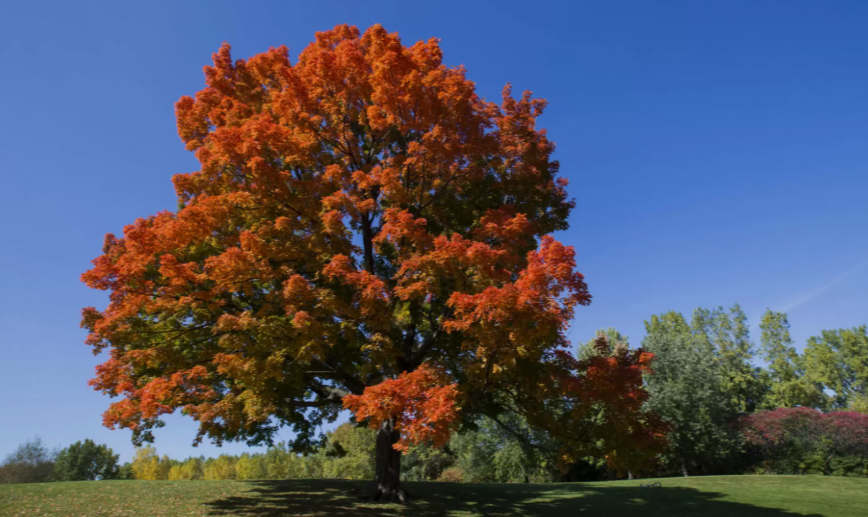
Maple trees are among the most beloved shade trees in North America, prized for their blazing fall color, their sweet sap and their dense, cooling canopies. The genus contains roughly 125 to 150 species worldwide, most of them native to Asia, with others growing wild in Europe, North Africa and North America. Every maple carries its seeds in paired, winged fruits called samaras, which spin like helicopters as they fall.
North America has its own rich group of native maples. Ohio State University counts 13 native maple species on the continent, ranging from towering forest trees in New England to small shrubby species in the Rocky Mountains and the Pacific Northwest. Gardeners have also brought many maples from Japan, China, Korea and Europe for their compact size and unusual leaves.
Maples are valuable trees as well as beautiful ones. Their sap is boiled into maple syrup, a tradition practiced by Native Americans long before European settlement. Sugar and black maples produce dense “hard maple” lumber used for flooring, furniture, bowling pins and baseball bats, while red, silver and bigleaf maples produce softer wood.
Not every maple is a good choice for every yard. Some grow into giants of 80 feet or more, while others stay small enough for a patio container, and a few introduced species have become invasive in North American forests. The 35 maples below include native species, popular imports and garden cultivars, along with where each one grows wild or is planted today.
1. Sugar Maple
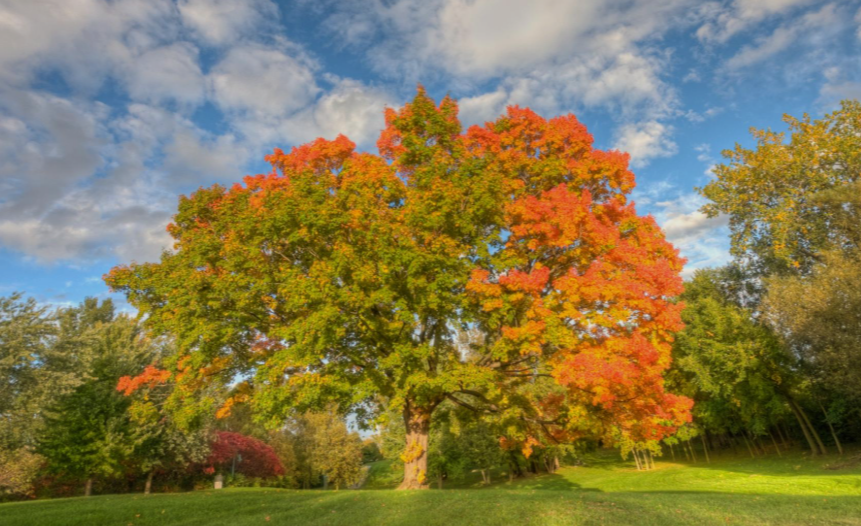
Sugar maple is the most famous maple in North America and the main source of maple syrup. Its leaves are five-lobed, smooth-edged and bright green in summer. In fall they turn brilliant orange, red and gold. The tree grows 60 to 80 feet tall with a dense, rounded crown. It can live for 300 years or more.
Michigan State University notes that sugar maple sap usually contains about 2% sugar, so it takes about 43 gallons of sap to make one gallon of syrup. Its hard, pale wood is prized for flooring, furniture and cabinets. It prefers cool climates and moist, well-drained soil. It struggles with road salt, compaction and urban heat. It is native to the northeastern United States, the Great Lakes region and southeastern Canada, and its leaf appears on the Canadian flag.
2. Black Maple
Black maple is a close relative of sugar maple. Its leaves usually have three main lobes and tend to droop at the edges. They are darker green than sugar maple leaves and fuzzy underneath. In fall they turn yellow to orange. It grows 60 to 80 feet tall with a rounded crown.
Purdue University notes that sugar and black maples are both native and sometimes called hard maples, while the invasive Norway maple often outcompetes them. Black maple’s sap is nearly as sweet as sugar maple’s and is tapped for syrup. It tolerates heat and drought slightly better than sugar maple. Its wood is sold as hard maple lumber. It is native to the Midwest and the Ohio and Mississippi River valleys of the United States and southern Ontario.
3. Red Maple
Red maple is one of the most widespread trees in eastern North America. It has red flowers in late winter, red seeds in spring and red leaf stalks in summer. Its leaves have three to five lobes with toothed edges. In fall they turn scarlet, orange or yellow. It grows 40 to 70 feet tall.
It grows from northern Ontario to southern Florida. It thrives in swamps as well as on dry, rocky hills. It is one of the most planted street and shade trees in the United States. It can be tapped for syrup, though its sap is less sweet than sugar maple’s. It is native across eastern North America, from Canada to Florida and west to Texas.
4. Silver Maple
Silver maple is a fast-growing native maple. Its leaves are deeply cut into five lobes. They are green above and silvery-white below, so they shimmer in the wind. In fall they turn pale yellow. It grows 50 to 80 feet tall.
It is one of the fastest-growing maples, often adding several feet a year. Its wood is weak and its branches break easily in storms. Its roots can crack sidewalks and clog drains. It grows naturally along rivers and in floodplains. It is native to the eastern and central United States and southeastern Canada.
5. Boxelder
Boxelder is the only native maple with compound leaves. Its leaves are divided into three to five leaflets, so it looks more like an ash than a maple. Its twigs are green and often coated with a waxy powder. It grows 30 to 60 feet tall. It grows quickly and often has several trunks.
Ohio State University notes that its sap produces a syrup with a flavor similar to sorghum. It grows naturally in river bottoms and moist soils. It tolerates drought, cold and poor soil. It attracts the red-and-black boxelder bug. It is native across most of the United States, southern Canada and parts of Mexico.
6. Bigleaf Maple
Bigleaf maple has the largest leaves of any maple. Its leaves can reach 12 inches or more across. They are deeply lobed and turn yellow to orange in fall. The tree grows 50 to 100 feet tall. Its trunk and branches are often covered in moss and ferns.
It is the main maple of the Pacific Northwest forests. Its wood can have attractive figured grain prized for guitars and furniture. Its sap is tapped for syrup in some areas. It grows in moist forests and along streams. It is native to the Pacific Coast from British Columbia to southern California.
7. Vine Maple
Vine maple is a small, sprawling native maple. Its leaves are nearly round with seven to nine shallow lobes. In fall they turn brilliant scarlet and orange. It often grows as a multi-stemmed shrub or small tree. It reaches 15 to 25 feet tall.
Its stems sometimes bend to the ground and take root. It grows in the shade of tall conifers. It is a popular native alternative to Japanese maple in the Northwest. It tolerates shade and moist soil. It is native to the Pacific Coast from British Columbia to northern California.
8. Rocky Mountain Maple
Rocky Mountain maple is a small native maple of the West. Its leaves are small, sharply toothed and three-lobed. In fall they turn yellow to red. It grows as a shrub or small tree. It reaches 15 to 30 feet tall.
It grows in mountain canyons and on rocky slopes. It tolerates cold winters and dry summers. Deer and elk browse its twigs. It is sometimes planted in western native gardens. It is native to the Rocky Mountains and other ranges of the western United States and Canada, from Alaska to New Mexico.
9. Bigtooth Maple
Bigtooth maple is a western relative of sugar maple. Its leaves have three to five lobes with large, blunt teeth. In fall they turn brilliant red and orange. It grows 20 to 40 feet tall. It often forms dense thickets in canyons.
It is also called canyon maple. Its fall color draws visitors to canyons in Utah, New Mexico and Texas. Its sap is sweet enough to make syrup. It tolerates drought and alkaline soil better than sugar maple. It is native to the Intermountain West and southwestern United States, including Utah, Arizona, New Mexico and Texas.
10. Florida Maple
Florida maple is a southern relative of sugar maple. Its leaves are smaller than sugar maple leaves and pale underneath. In fall they turn yellow to orange-red. It grows 30 to 60 feet tall. It has smooth gray bark.
It is also called southern sugar maple. It tolerates heat and humidity better than sugar maple. It is a good choice for shade in the Southeast. It grows in moist forests and along streams. It is native to the coastal plain and piedmont of the southeastern United States, from Virginia to Florida and Texas.
11. Chalk Maple
Chalk maple is a small southern maple. Its leaves resemble small sugar maple leaves. Its bark is smooth and chalky white. In fall its leaves turn yellow, orange and red. It grows 20 to 30 feet tall.
It often grows with several trunks. It tolerates shade and grows in the understory of hardwood forests. It suits small yards in the South. It grows slowly. It is native to the southeastern United States, especially Georgia, Alabama and the Carolinas.
12. Striped Maple
Striped maple is a native maple known for its bark. Its young bark is green with white, vertical stripes. Its leaves are large, three-lobed and finely toothed. In fall they turn bright yellow. It grows 15 to 30 feet tall.
It is also called moosewood, because moose and deer eat its bark. It grows in the shade of northern forests. It needs cool, moist conditions. It suits woodland gardens. It is native to the northeastern United States, the Appalachian Mountains and southeastern Canada.
13. Mountain Maple
Mountain maple is a shrubby native maple. Its leaves are three-lobed and coarsely toothed. In fall they turn yellow, orange and red. It grows as a large shrub or small tree. It reaches 10 to 25 feet tall.
It produces upright clusters of small flowers in early summer. It grows in cool, moist forests and along streams. It tolerates deep shade. It is browsed by deer and moose. It is native to the northeastern United States, the Great Lakes region, the Appalachians and much of Canada.
14. Japanese Maple
Japanese maple is the most popular ornamental maple. Its leaves are deeply lobed and come in shades of green, red, purple and variegated. Many types have finely cut, lacy leaves. In fall they turn red, orange, purple or gold. Most grow 10 to 25 feet tall.
Hundreds of cultivars exist, ranging from tiny dwarfs to small trees. It prefers partial shade and protection from hot afternoon sun. It suits patios, small gardens and containers. It is popular for bonsai. It is native to Japan, Korea and eastern China and is grown in gardens across the United States, especially in the Pacific Northwest and the East.
15. Full Moon Maple
Full moon maple has round, fan-shaped leaves. Its leaves have seven to eleven shallow lobes. They resemble the full moon, which gave the tree its name. In fall they turn orange, red and gold. It grows 15 to 25 feet tall.
Its golden-leaved form is one of the most popular small garden maples. It grows slowly. It prefers partial shade and moist soil. It is hardier than many Japanese maples. It is native to Japan and is grown in gardens across the northern United States.
16. Norway Maple
Norway maple is a large European maple widely planted in North America. Its leaves are broad and five-lobed. When a leaf stalk is broken, it oozes milky sap. In fall the leaves usually turn yellow. It grows 40 to 60 feet tall.
It was brought to North America in the 1750s and planted heavily along city streets. The University of Connecticut describes it as an invasive plant that displaces native species and recommends sugar and red maples as native alternatives. Its seeds spread widely and sprout readily in woodlands. It is banned from sale in some states, including New Hampshire and Massachusetts. It is native to Europe and western Asia and has naturalized across the northeastern and Midwestern United States and the Pacific Northwest.
17. Sycamore Maple
Sycamore maple is the most common maple in Europe. Its leaves are large, five-lobed and dark green. Its bark flakes off in patches as it ages. Its seeds hang in long clusters. It grows 40 to 70 feet tall.
It tolerates wind, salt and coastal conditions. It is planted as a shade tree in parts of the northeastern United States. It has become invasive in some areas. Its wood is used for violins and kitchen utensils. It is native to central and southern Europe and western Asia.
18. Hedge Maple
Hedge maple is a small European maple. Its leaves are small, rounded and three- to five-lobed. In fall they turn yellow. It grows 25 to 35 feet tall. It forms a dense, rounded crown.
It is also called field maple. It tolerates pruning well and is often used for hedges. It handles drought, compacted soil and urban conditions. It is planted as a street tree in American cities. It is native to Europe, North Africa and western Asia.
19. Amur Maple
Amur maple is a small, shrubby maple. Its leaves are three-lobed with a long central lobe. In fall they turn brilliant red. Its seeds turn red in summer. It grows 15 to 20 feet tall.
It is very cold-hardy and was widely planted in the northern United States. It has become invasive in parts of the Midwest and Northeast. Its seeds spread easily into woodlands and prairies. Many states now discourage planting it. It is native to northeastern China, Korea, Japan and eastern Russia.
20. Tatarian Maple
Tatarian maple is a small, shrubby relative of Amur maple. Its leaves are mostly unlobed or only shallowly lobed. Its seeds turn bright red in summer. In fall its leaves turn yellow to red. It grows 15 to 20 feet tall.
It is very cold-hardy and drought-tolerant. It is planted in windbreaks on the northern Great Plains. It suits small yards in harsh climates. It is less invasive than Amur maple in most areas. It is native to southeastern Europe and western Asia.
21. Paperbark Maple
Paperbark maple is grown for its peeling bark. Its bark is cinnamon to reddish-brown. It peels away in thin, papery curls. Its leaves are divided into three leaflets. In fall they turn red and orange.
It grows slowly to 20 to 30 feet tall. Its bark is especially beautiful in winter. It is one of the most admired small trees for year-round interest. It needs moist, well-drained soil. It is native to central China and is grown in gardens across the northern and eastern United States.
22. Trident Maple
Trident maple has small, three-lobed leaves. Each leaf looks like a trident or three-pointed fork. In fall they turn red, orange and yellow. Its bark becomes orange-brown and flaky. It grows 20 to 35 feet tall.
It tolerates heat, drought and urban conditions. It is planted as a street tree in warm parts of the United States. It is one of the most popular maples for bonsai. It forms a rounded crown. It is native to eastern China, Korea and Taiwan.
23. Shantung Maple
Shantung maple is a tough small maple. Its leaves are star-shaped with five to seven pointed lobes. New leaves emerge reddish-purple. In fall they turn yellow, orange and red. It grows 20 to 30 feet tall.
It tolerates heat, drought and alkaline soils better than most maples. It is planted as a street tree in the southern Great Plains. It is also called purpleblow maple. It suits hot, dry climates. It is native to northern China and Korea.
24. Three-Flowered Maple
Three-flowered maple has leaves divided into three leaflets. Its flowers bloom in clusters of three. Its bark is tan and peels in shaggy strips. In fall its leaves turn brilliant orange and red. It grows 20 to 30 feet tall.
It is closely related to paperbark maple. It is very cold-hardy. It is one of the best maples for fall color in cold regions. It is uncommon in nurseries. It is native to northeastern China and Korea.
25. David’s Maple
David’s maple is a snakebark maple. Its bark is green with white vertical stripes. Its leaves are oval and unlobed. In fall they turn yellow, orange or red. It grows 20 to 35 feet tall.
It is named after the French missionary and naturalist Armand David. It is grown for its striking bark. It needs cool summers and partial shade. It suits woodland gardens. It is native to central and western China.
26. Freeman Maple
Freeman maple is a natural hybrid between red and silver maple. It combines the fast growth of silver maple with the fall color of red maple. Its leaves are deeply lobed. In fall they turn brilliant red or orange. It grows 40 to 60 feet tall.
Its most popular cultivar is Autumn Blaze, one of the best-selling shade trees in the United States. It tolerates wet soil and urban conditions. It grows faster than red maple. Its wood is stronger than silver maple’s. It occurs naturally where red and silver maples grow together in eastern North America.
27. Miyabe Maple
Miyabe maple is a sturdy shade maple. Its leaves are five-lobed and dark green. In fall they turn yellow. Its bark is corky and furrowed. It grows 30 to 40 feet tall.
Its upright cultivar State Street is planted as a street tree. It tolerates drought, heat and alkaline soil. It is very cold-hardy. It is uncommon but growing in popularity. It is native to northern Japan.
28. Korean Maple
Korean maple is a cold-hardy relative of Japanese maple. Its leaves are deeply cut into nine to eleven lobes. In fall they turn brilliant red, orange and purple. It grows 15 to 25 feet tall. It forms a rounded crown.
It survives colder winters than Japanese maple. It is a good choice for the northern United States and Canada. It prefers partial shade and moist soil. It suits small gardens. It is native to Korea, northeastern China and eastern Russia.
29. Bloodgood Japanese Maple
Bloodgood is the most popular red Japanese maple. Its leaves are deep reddish-purple from spring to fall. In fall they turn bright crimson. It grows 15 to 20 feet tall. It forms a rounded, spreading crown.
It holds its dark color well in summer heat. It produces red seeds that add interest. It suits patios, lawns and foundation plantings. It needs some shade in hot climates. It was selected in New York and is grown across the United States.
30. Crimson King Norway Maple
Crimson King is a red-leaved form of Norway maple. Its leaves stay deep maroon-purple all summer. In fall they turn dark bronze. It grows 35 to 45 feet tall. It forms a dense, rounded crown.
Purdue University notes that it has long been a landscaping favorite because it keeps its deep red color all year. It shares the invasive tendencies of Norway maple. Many experts now recommend native maples instead. It is still found in many older neighborhoods. It was selected in Belgium and has been widely planted across the northern United States and Canada.
31. Coral Bark Japanese Maple
Coral bark Japanese maple is grown for its bright red stems. Its young branches turn coral-red in winter. Its leaves are light green in summer. In fall they turn golden yellow. It grows 15 to 25 feet tall.
It is one of the best small trees for winter color. Its red bark glows against snow. It grows upright and vase-shaped. It prefers partial shade. It was developed in Japan and is grown in gardens across the United States.
32. Laceleaf Japanese Maple
Laceleaf Japanese maples have finely cut, feathery leaves. Their branches weep and cascade to the ground. Their leaves can be green, red or purple. In fall they turn red, orange or gold. They usually grow only 6 to 10 feet tall.
Popular types include Crimson Queen and Tamukeyama. They suit small gardens, rock gardens and containers. They need protection from hot afternoon sun and wind. They grow slowly. They were developed in Japan and are grown across the United States.
33. October Glory Red Maple
October Glory is a popular red maple cultivar. Its leaves are glossy green in summer. In fall they turn brilliant crimson and hold their color late into the season. It grows 40 to 50 feet tall. It forms an oval to rounded crown.
It is one of the best red maples for the South. It tolerates heat better than many red maples. It is widely planted as a street and shade tree. It colors later than most maples. It is grown across the eastern and southern United States.
34. Red Sunset Red Maple
Red Sunset is one of the most popular red maple cultivars. Its leaves are dark green in summer. In fall they turn brilliant orange-red. It grows 40 to 50 feet tall. It forms an upright, oval crown.
It colors earlier than October Glory. It is very cold-hardy. It is widely planted along streets and in parks. It grows quickly. It is grown across the northern and eastern United States and Canada.
35. Green Mountain Sugar Maple
Green Mountain is a tough sugar maple cultivar. Its leaves are thick, dark green and resist scorching. In fall they turn orange and red. It grows 50 to 70 feet tall. It forms an oval crown.
It tolerates heat and drought better than most sugar maples. It is one of the best sugar maples for the Midwest and lower Plains. It is planted as a shade and street tree. It grows at a moderate rate. It is grown across the northern and central United States.
Sources
Ohio State University, “Maple Tree ID”
Michigan State University, “Maple Syrup Production”
University of Connecticut, “Norway Maple”
Purdue University, “Distinguishing Between Norway, Sugar, and Black Maples”
Ohio State University, “Hobby Maple Syrup Production”
Towson University Glen Arboretum, “Norway Maple”
Brandywine Conservancy, “Invasive Species Spotlight: Norway Maple”
