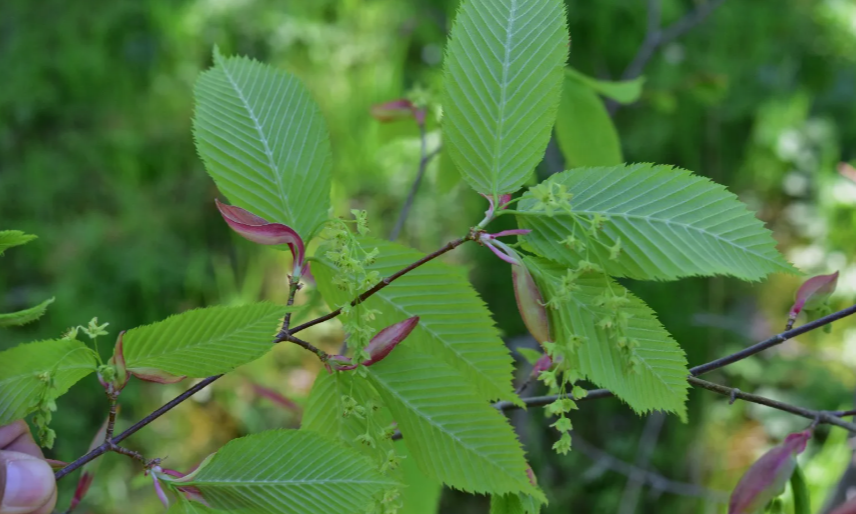
The hornbeam maple is one of the most confusing trees you can plant, in the best possible way. Most people who see it are sure it’s a hornbeam, and they only change their minds when someone points out the paired leaves and winged seeds. For gardeners who like a plant that surprises visitors, few trees work better.
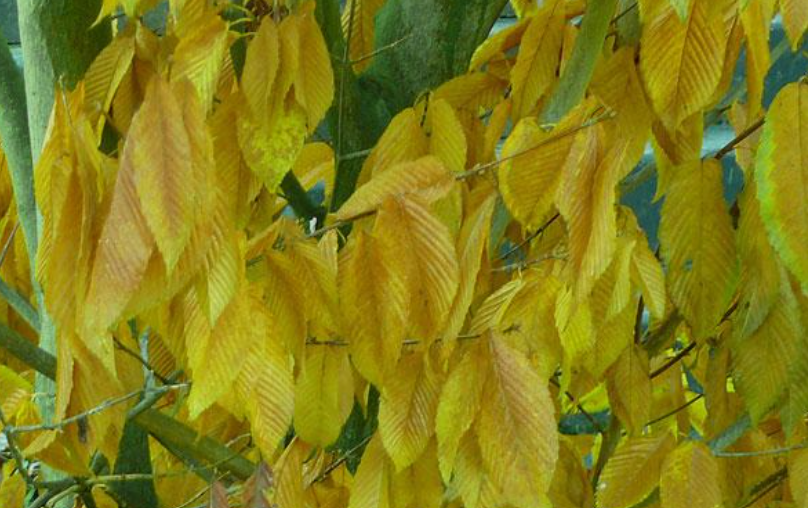
This small Japanese tree has none of the lobed, hand-shaped leaves people expect from a maple. Instead, it carries long, narrow, deeply ribbed leaves that turn bright butter-yellow in autumn. It’s still rare in American nurseries, which is part of its appeal for collectors and anyone who wants something their neighbors have never seen.
Botanical Classification
The hornbeam maple belongs to the maple genus, which today sits within the soapberry family alongside horse chestnuts and lychees. Older references still place it in the separate maple family, a grouping botanists have since folded into the soapberry family.
What makes this tree special to botanists is its isolation within the genus. It is the only member of its own botanical section inside the maple genus, so it has no close relatives among the roughly 130 or more maple species worldwide. It is also one of about 22 maple species found naturally only in Japan.
Brief History
In the wild, the hornbeam maple grows on the Japanese islands of Honshu, Shikoku, and Kyushu, where it favors cool mountain woodlands and stream banks. Its Japanese name, chidori-no-ki, refers to the plover, a small shorebird, and the tree has a long history in Japanese forests and gardens.
Western botanists formally described the species in the 1840s, and the tree arrived in European and American gardens around the late 1870s and early 1880s. It never became a mainstream nursery tree. Instead, it stayed mostly in arboretums and botanical gardens, where it is still grown today as a specimen in maple collections across the US.
Identifying Characteristics
The leaves are the tree’s signature feature. Each one is unlobed, oval to oblong, and usually 3 to 5 inches long and about 2 inches wide, tapering to a long point. Oregon State University’s landscape plant profile notes that the leaf margins are double-toothed and that fall color ranges from bright yellow to brown.
The leaf surface is what fools people. Each leaf has 18 to 24 pairs of straight, parallel veins running from the midrib to the edge, giving it the pleated, corrugated look of a hornbeam or beech leaf. The easiest way to tell the two apart is leaf arrangement: hornbeam maple leaves grow in opposite pairs along the stem, while true hornbeam leaves alternate.
In spring the tree produces small greenish flowers in hanging clusters, usually around May. These develop into the classic paired maple seeds, each with a wing roughly 1 inch long, which is the most obvious clue to the tree’s real identity. The bark is smooth and dark greenish-gray to gray-brown, and it stays fairly clean and attractive as the tree ages.
In American landscapes, the hornbeam maple usually reaches 20 to 30 feet tall with a similar spread, though wild trees in Japan can grow taller. It often grows with several trunks, forming a dense, vase-shaped to rounded crown that branches low to the ground. Growth is moderate, so the tree fills its space without getting out of hand.
Landscape Uses
The hornbeam maple works best as a conversation piece. Plant it where people walk past and can see the leaves up close, such as near a path, patio, or entry garden. The ribbed foliage reads best at eye level, and the moment someone notices the maple seeds hanging among the hornbeam-like leaves usually starts a conversation.
Its modest size suits small and medium yards where a full-sized shade tree would be too much. The Chicago Botanic Garden’s plant profile describes the tree as reaching about 30 feet tall with a similar spread, which puts it in the same size range as many popular ornamental trees.
Because it branches low and holds a dense crown, the hornbeam maple also makes a good screen or informal hedge, much like true hornbeam. It fits naturally in woodland gardens and shady borders, and it pairs well with Japanese maples, ferns, and hostas in Asian-inspired designs.
Growing Considerations
The hornbeam maple grows best in roughly USDA hardiness zones 5 through 7, and some growers report success in sheltered parts of zone 4. It does well in the cooler, wetter parts of the US, including the Pacific Northwest, the Upper Midwest, and the Northeast. Hot, humid summers in the Deep South and the dry heat of the Southwest are a poor match.
The tree prefers partial shade, especially afternoon shade, though it handles full sun in cooler northern gardens. Too much hot sun can scorch the thin leaves, leaving brown edges by late summer. Morning sun with protection from the hottest part of the day is the ideal setup in most of the country.
Plant it in moist, well-drained, slightly acidic to neutral soil that is rich in organic matter. Because the tree comes from stream banks and mountain forests, it isn’t drought tolerant and needs consistent moisture. A deep watering of about 1 inch per week during dry spells, especially in the first 2 to 3 years, helps it settle in.
A 2- to 3-inch layer of shredded bark or leaf mulch keeps the roots cool and holds moisture. Keep the mulch a few inches away from the trunk to prevent rot. Light feeding with a balanced slow-release fertilizer in early spring is plenty, since heavy fertilizing encourages weak, soft growth.
Pruning needs are minimal, and the tree usually looks best left in its natural multi-stemmed form. If shaping is needed, prune during late-winter dormancy, removing crossing branches and lightly thinning the crown. Gardeners using it as a hedge can trim it more regularly, much as they would a true hornbeam.
Serious pest and disease problems are uncommon. Like other maples, the tree can be affected by verticillium wilt, a soil-borne fungus that causes sudden branch dieback, so avoid sites where wilt-prone trees have died before. Leaf scorch from heat and drought is the most common issue, and the right site with steady watering prevents it.
Finding one is often the hardest part of growing this tree. The hornbeam maple is mostly sold by specialty and mail-order nurseries that focus on rare trees and maples, so expect to search and possibly pay a premium. For collectors, it is one of the more unusual and satisfying maples to grow.
Sources
- Oregon State University Landscape Plants, “Hornbeam Maple”
- Chicago Botanic Garden, Plant Finder: “Hornbeam Maple”
- Trees and Shrubs Online, “Hornbeam Maple”
- Royal Horticultural Society, “Hornbeam Maple”
- The Dawes Arboretum, Arboretum Explorer: “Hornbeam Maple”
